
Recent Articles



MES – Understanding Structure and Potential
What is an MES used for?
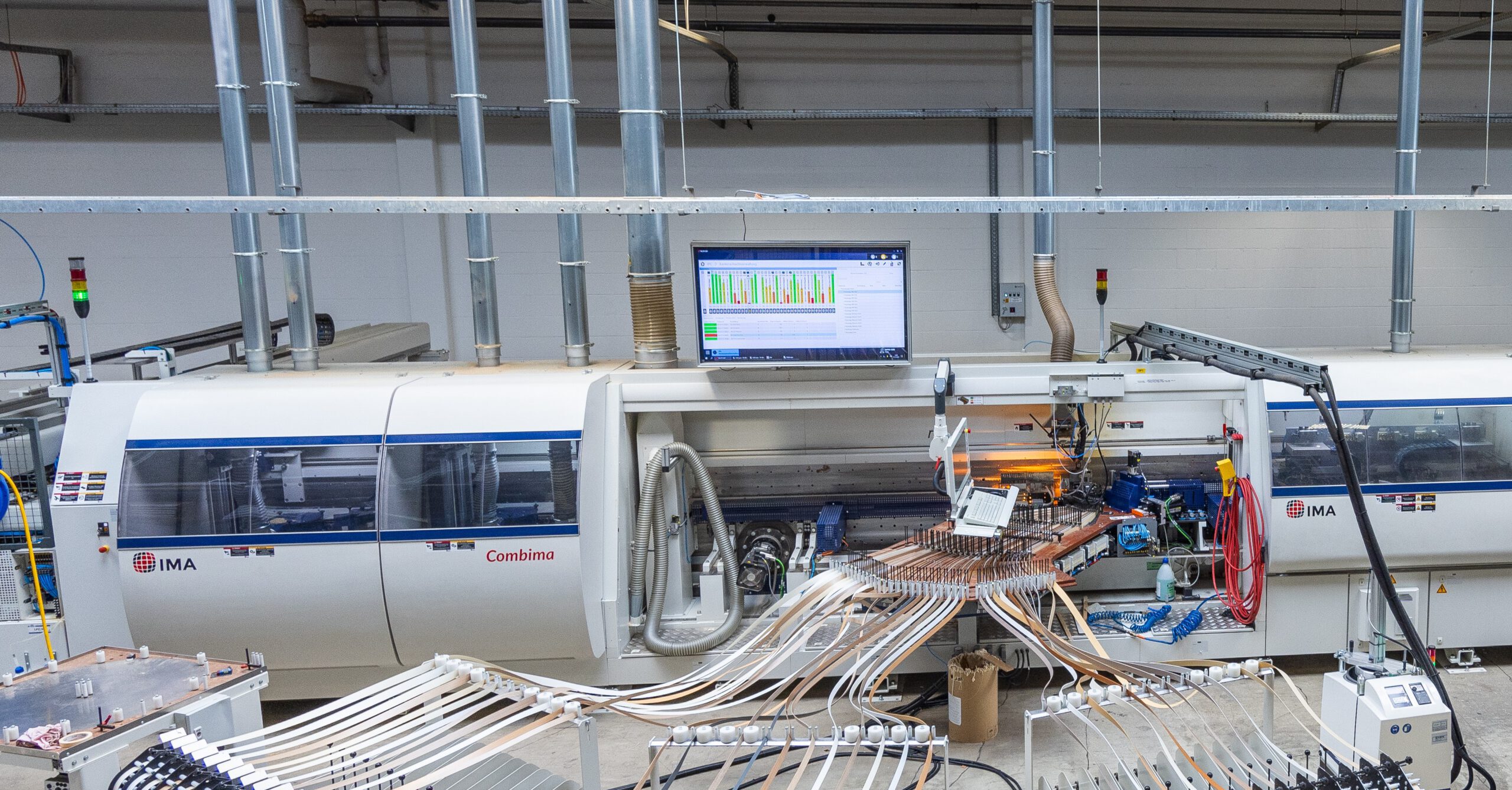
A Manufacturing Execution System (MES) is implemented in modern manufacturing environments to digitalize structure and manage production processes. It serves as the key tool for production managers to monitor and control internal operations and becomes the central production platform. All stations and production steps are connected through the system.
An MES captures data from production orders machine data and feedback from workstations. At the same time it provides a communication interface between execution on the shopfloor and the monitoring and control processes at management level. It should not be understood solely as a digital documentation platform but above all as a lever for automated process control and optimization.
How does an MES differ from an ERP system?
An MES is often confused with an ERP system and understandably the first question is: what can an MES do that an ERP cannot? MES and ERP work in a complementary way and exchange data through an interface. However they cannot replace each other. An ERP plans and manages the company while an MES acts as the control platform for manufacturing and focuses on all processes executed within production.
The ERP system provides information at the enterprise level:
Which customer order has been released?
What production volumes are planned?
Which delivery dates have been agreed?
What planned and actual costs occur?
The MES creates transparency at the production level and answers the operational questions of manufacturing:
Which order is currently running at which station?
Why is a machine currently at a standstill?
What processing status are the orders in?
What is the actual total production time?
How much material has been consumed?
How do OEE and other KPIs develop over time?
What improvements can be expected from implementing an MES?
An MES significantly and measurably improves processes in manufacturing. It makes daily work easier for employees on the shopfloor and gives production managers greater control over operations. As the central control platform of production it reduces coordination effort and minimizes manual searching and documentation. At the same time it provides real time information and translates expert knowledge into standardized and repeatable system processes.
The impact of an MES extends far beyond the production floor. It creates a transparent data foundation for management which reduces risks in strategic decision making. Reliable delivery dates and stable quality standards sustainably increase customer satisfaction. At the same time production costs decrease measurably creating a solid foundation for competitiveness even in economically challenging market conditions.
The improvements can be summarized as follows:
Productivity
Less manual searching and documentation through centralized and digital information availability.
Costs
Savings through optimization of cutting waste packaging stacking sequence planning and production scheduling while reducing personnel and material usage and improving capacity utilization.
Time
Faster processes through automated scheduling sequence optimization and mobile work steps.
Capacity utilization
Balanced use of storage capacity through intelligent warehouse control material flow optimization and structured intermediate storage management.
Quality
Standardized processes and guided work instructions increase process reliability.
Operational responsiveness
Real time monitoring enables early detection of bottlenecks and disruptions.
Competitiveness
Improved performance KPIs and stable cost structures strengthen on time delivery margins and customer satisfaction. Investment and return on investment remain in a strategically balanced relationship.
Is an MES worthwhile for batch size 1?
Batch size 1 production is characterized by high product variability short delivery windows and complex processes. This requires dynamic planning supported by connected data rather than static assumptions and isolated lists.
In batch size 1 environments measurable improvements are achieved through:
Optimized sequence planning
Real time visible KPIs
Automated order scheduling
Paperless and fully traceable processes
As a result the MES proves to be a key instrument for batch size 1 manufacturing enabling shorter throughput times reliable on time delivery and balanced utilization of available resources.
How much productivity improvement is realistic?
However several factors can be defined that significantly influence the optimization potential:
1. Data transparency
Are production data already captured in a structured way and in real time or are feedback processes still largely manual?
In general the lower the existing level of data transparency the greater the potential for noticeable improvement.
2. Level of automation
In production environments that are still heavily manual the first effects arise from the digitalization of work instructions feedback processes and documentation.
In largely automated production environments the focus shifts toward increasing machine availability equipment performance and quality.
3. Data quality
Consistent and fully maintained master data from the ERP system are essential for stable optimization processes and for building a reliable digital twin of production.
4. Complexity of variant manufacturing
As product variability increases the potential for efficiency gains also rises particularly through material savings optimized detailed scheduling and improvements in OEE.
Realistic framework
In structured production environments with a solid foundation productivity improvements of 5 to 20 percent are realistic. In complex and previously less digitalized production environments even greater effects can be achieved particularly through reduced downtime more stable planning and improved on time delivery.
How quickly does an MES deliver a return on investment?
The impact of an MES extends across multiple levels and areas of the organization. Improvements are not measured by a single isolated metric. Without a clear understanding of the project scope no reliable statement can be made. The payback period is always linked to the scale of the project and the defined objectives.
As a general guideline companies can expect a timeframe between 12 and 36 months. If bottlenecks are already clearly defined and a high level of automation is in place the payback period typically ranges from 12 to 18 months. For complex projects involving multiple sites a timeframe of 24 to 36 months should be considered. A precise definition of objectives at the start of the project and a complete and consistent data foundation from the ERP system have a positive impact on both implementation time and the payback period.
What advantages do custom MES solutions offer?
Custom MES solutions consistently align with the real value creation processes of a company. Contrary to common assumptions the initial project effort for standard solutions and custom solutions differs far less than often expected. A standard solution also needs to be integrated into existing structures. Processes data models and workflows must be analyzed structured and clearly defined in any case. The internal effort for analysis and coordination is therefore comparable in both scenarios.
The key difference lies in the operational value created. A custom solution does not only digitize existing processes but enables targeted optimization across the entire value chain. This includes for example production specific detailed scheduling intelligent sequence optimization and precise material flow control. These functions in particular unlock the economic leverage. Reduced throughput times higher machine availability and more efficient use of resources create a measurable and sustainable return on investment. A custom MES solution therefore not only provides transparency but also establishes the foundation for long term strategic competitiveness.
What strategic considerations support a specialized system architecture?
From a strategic perspective however the question arises of long term flexibility within the system landscape. When central systems such as ERP and MES as well as related applications like CAD CAM or PLM are operated within a closed ecosystem a strong technological dependency on a single provider can emerge. As a result future extensions functional adjustments or system replacements may become significantly more complex and costly.
A specialized system architecture follows a modular approach. ERP remains responsible for commercial and business management CAD and CAM handle design and manufacturing data PLM manages product life cycles and the MES controls operational production processes. Through open interfaces and clearly defined responsibilities an integrated yet independent system environment is created.
This structure ensures flexibility. Existing systems can be expanded or modernized selectively without replacing the entire IT architecture.
The decision should therefore not primarily be based on short term simplification but on long term flexibility and technological independence. A powerful MES should not replace these structures but complement them through open interfaces and a clear distribution of responsibilities.
Why is an independent MES strategically valuable?
An independent MES solution makes a significant contribution to long term future readiness and therefore represents a strategic investment in sustainable stability. It enables the manufacturer independent development of the machine landscape and ensures that investments remain flexible and expandable. At the same time full data ownership remains within the company and is not tied to a specific system provider.
In addition an MES that is designed as an independent and modular system offers clear advantages in terms of scalability. It can be extended to additional production sites new machines or the integration of individual processes without limiting the overall system architecture.